

Glass edging machines: The masterminds behind beveled edges, curves, and decorative profiles
In the realm of glass fabrication, precision and aesthetics are paramount. The process of shaping glass into intricate designs and structures is a delicate balance between craftsmanship and technology. Glass edging machines, the unsung heroes of this endeavor, play a pivotal role in creating beveled edges, curved lines, and other decorative profiles that elevate the aesthetic appeal of glass products. This article delves into the intricacies of glass edging machines, their capabilities, and how they contribute to the art of glasswork.

I. Introduction
Glass has been a staple in architecture, design, and daily life for centuries. Its versatility has led to its application in various fields, from windows and doors to decorative features and functional components. The art of glassworking involves cutting, shaping, polishing, and edging the glass to achieve the desired aesthetic and functional outcomes. Among these processes, glass edging is crucial for enhancing the durability, safety, and visual appeal of glass products.
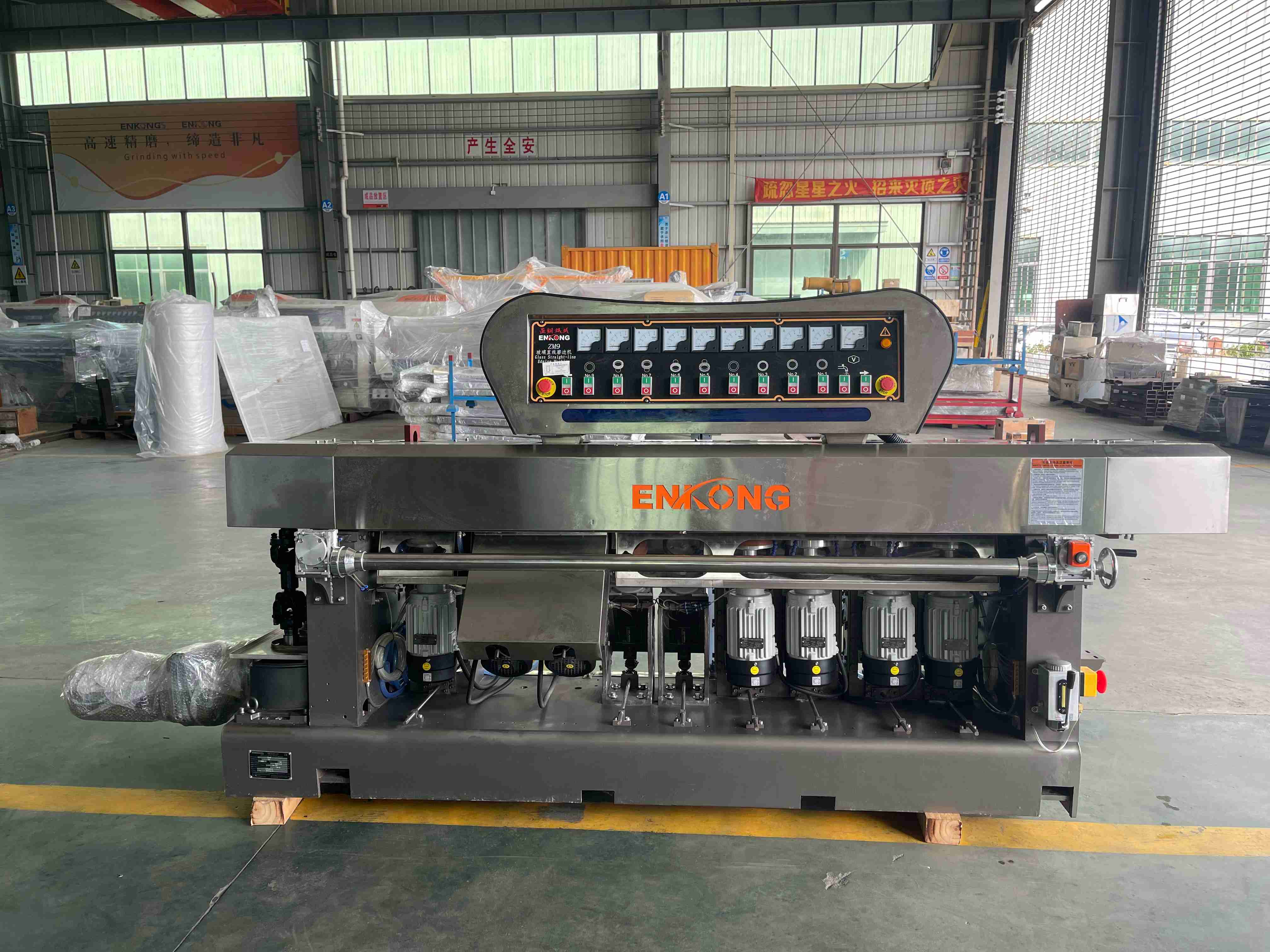
Glass edging machines have revolutionized this aspect of glass fabrication by automating the process and achieving precision beyond what manual methods could offer. In this article, we explore the capabilities of these glass grinding machines in creating beveled edges, curves, and other decorative profiles.
II. The role of glass grinding machines
Glass grinding machines are specialized tools designed to process the edges of glass sheets to a desired thickness, shape, and finish. They are an essential part of the glass manufacturing process as they ensure that the edges are smooth, uniform, and free from defects that could compromise the strength or appearance of the glass.
The primary functions of glass edging machines include:
* Removing sharp edges from cut glass sheets to prevent injury and improve safety.
* Reducing the thickness of the glass edge to enhance durability and reduce breakage risk.
* Creating decorative profiles such as beveled edges, curves, and other geometric shapes to enhance the aesthetic appeal of glass products.
* Polishing the edges to a smooth finish that enhances the overall look and feel of the glass.
III. Beveled edges: The classic choice for sophistication
Beveled edges are a classic choice in glass fabrication for their ability to add a touch of sophistication to any design. Beveling involves cutting a slanted angle on the edge of the glass to create a smooth transition between the edge and the main surface of the glass. Glass edging machines can be equipped with beveling heads that can create various bevel angles ranging from 1mm to 10mm or more. These glass grinding machines can also achieve precise bevel lengths to ensure that each edge is consistent in both angle and length.
L'utilisation de bords biseautés ne se limite pas aux applications architecturales, mais s'étend également aux éléments décoratifs tels que les plateaux de table, les étagères et autres meubles. Les bords biseautés peuvent créer une impression de profondeur et d'élégance qui renforce l'attrait esthétique global de ces articles. De plus, ils offrent une couche de protection supplémentaire en créant une surface lisse qui est moins susceptible de s'écailler ou de se casser par rapport au verre sans bords ou non biseauté.
IV. Bords incurvés : embrasser l'organique dans le design
Les bords incurvés ajoutent une touche de beauté organique à tout design en imitant la courbure naturelle de matériaux tels que la pierre ou le bois. Les machines à bordurer le verre dotées de capacités de traitement incurvées peuvent créer des bords incurvés aussi lisses que ceux que l'on trouve dans la nature tout en conservant précision et cohérence. Ces rectifieuses pour verre utilisent des têtes ou des rouleaux spéciaux qui s'adaptent à la courbure souhaitée, garantissant que chaque bord est parfaitement formé sans aucune imperfection ni irrégularité.
Les bords incurvés sont très appréciés dans les applications architecturales telles que les fenêtres et les portes incurvées, ainsi que dans les pièces décoratives telles que les miroirs ou les vases incurvés. Ils créent une impression de mouvement et de fluidité dans les designs qui peuvent considérablement améliorer l'impact visuel d'un espace. De plus, les bords incurvés offrent un moyen unique d'intégrer des formes organiques dans des designs modernes tout en préservant la durabilité et la fonctionnalité des produits en verre.
V. Profils décoratifs : embrasser la créativité dans la forme et la fonction
Au-delà des bords biseautés et incurvés, les machines de bordure de verre peuvent créer une large gamme de profils décoratifs qui ajoutent une touche d'individualité à n'importe quel design. Ceux-ci incluent, sans toutefois s'y limiter, l'ogee (un profil incurvé avec une arche prononcée), le bullnose (un bord arrondi avec un sommet plat) et l'onglet (un profil étagé avec des angles vifs). Chaque profil offre des caractéristiques visuelles uniques qui peuvent compléter différentes esthétiques de conception et exigences fonctionnelles.
Les profils décoratifs sont particulièrement populaires dans les éléments décoratifs tels que les cabines de douche, les étagères, les dosserets et même les œuvres d'art murales.meulage de verre Les machines permettent aux designers d'exprimer leur créativité tout en garantissant que chaque pièce soit à la fois fonctionnelle et esthétique. L'utilisation de profils décoratifs permet également la personnalisation, permettant aux designers de créer des pièces uniques qui se démarquent des autres.
